I don’t want to work that extra shift but my discover statement tells me otherwise- it tells me that once again I’m falling into a world of debt- for daring to live a life above my means, above my class and if I’m not careful I can slip back into poverty status so I’ll work that extra shift and stop trying to live a higher class life that’s not meant for me yet-
I wrote this poem in 2019 when I got into a fight with a friend because he was cruel to one of my friends. After this fight, we didn’t talk for 2 years but we ended up reconnecting in the summer of this year.
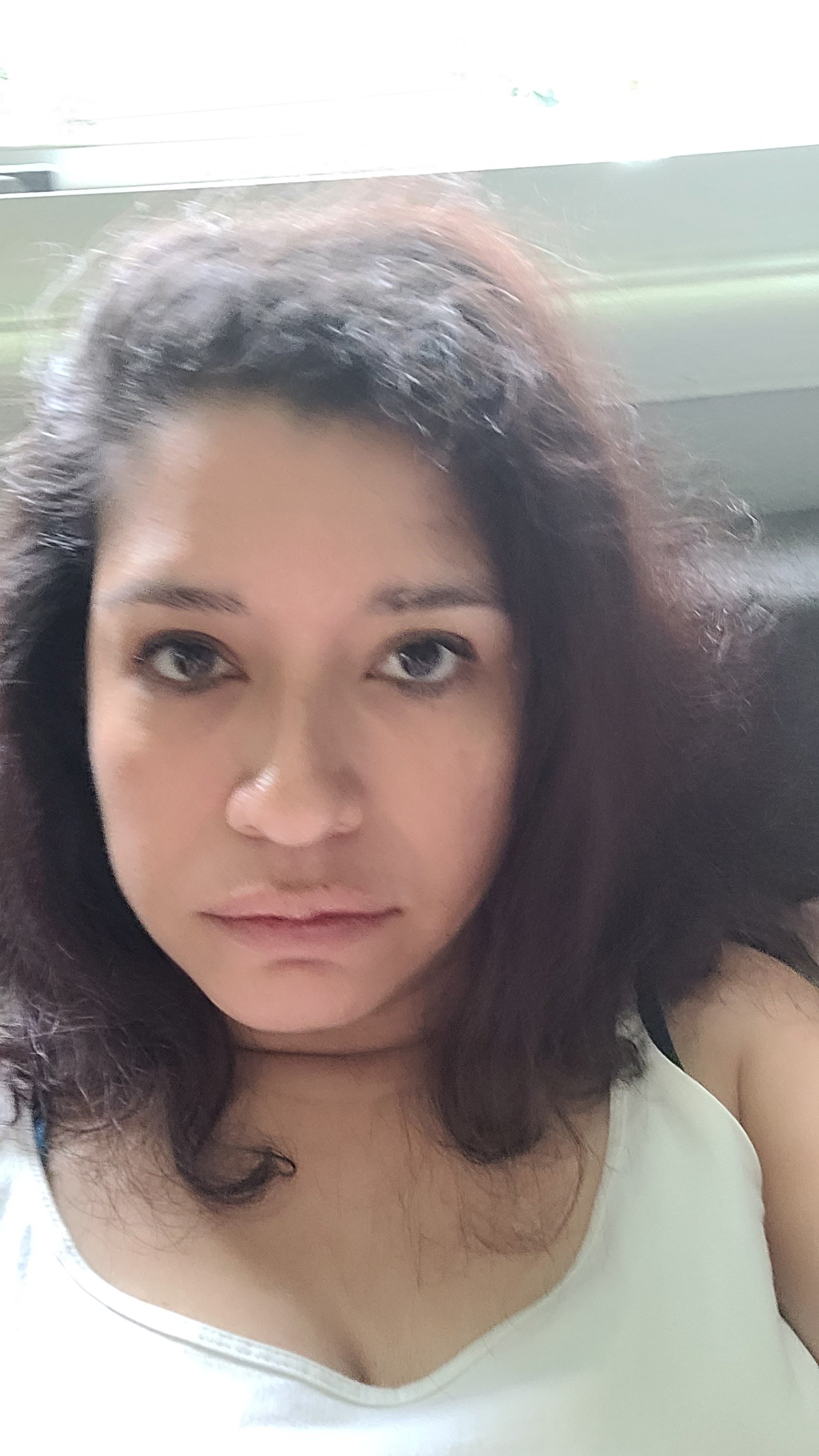
random pic of me pissed in 2019
“Control myself”, he said as I called out his misogyny his fragile ego couldn’t handle hard truths thrown at him he thinks that he has a license to offend because of the organ between his legs and the pale color of his skin- He thinks that I’m wrong for not sitting still and silent He thinks that I have no right to stand up for myself “Control myself”, he said to and “fuck off” I replied to him you won’t ever be able to control a woman like me
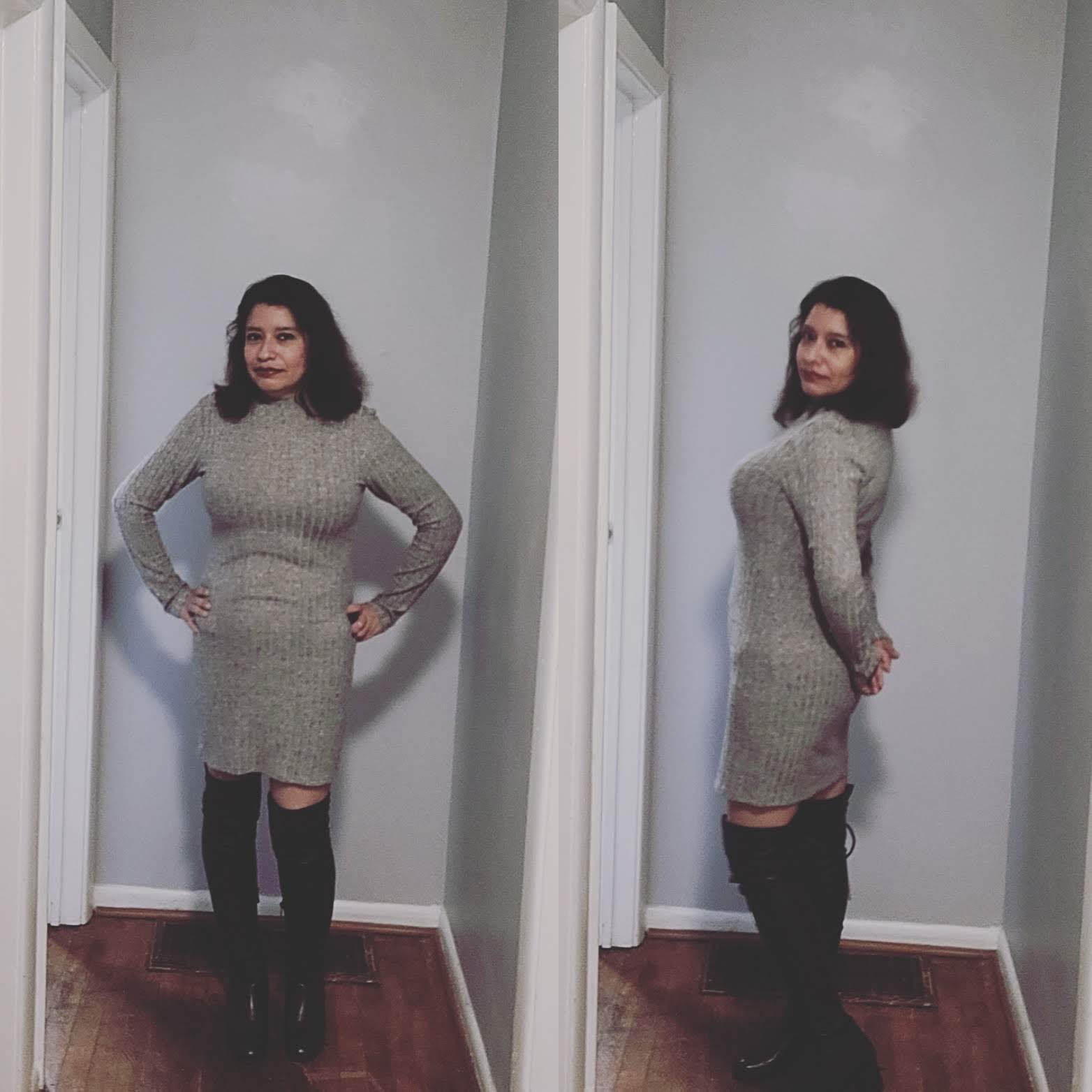
look at that Goddess, very awkward, very full of herself
gratitude taste like mami’s sopa de pollo gratitude smells like my lover’s cologne gratitude feels like a warm hug from my son gratitude sounds like my sister’s car in my driveway gratitude looks like me looking at the Goddess in the mirror
without a care in the world-we danced in the rain enjoying the last vestiges of childhood feeling the wet ground against our feet stomping and laughing and enjoying the miracle of this moment as it rained in paradise
I wrote this in 2019 when I was reflecting about the way men have often objectified in a way thatthey almost always seem to just want the fun and sexy part of me but seem to often have problems seeing the rest of me. I’ve almost always felt like I’ve been good enough to be their lover but never good enough to be introduced to their mother. Do I still feel this way? I honestly don’t know. I like the attention and validation I get from men because of my looks but sometimes it feels so hollow. **This poem went through heavy edits in June of 2026.
Often men want this girl…the ones that’s always down for a “good” timeBUT run away from this one….the other girl …the vulnerable one that has a realness hard to accept
Tell me I’m beautiful, tell me I’m sexy Objectify me, sleep with me breadcrumb me, ghost me, then try to come back to me And when I deny you insult me, threaten me,try your best to hurt me- Your words mean nothing to me You’re not the first but will be the last who tries to destroy me You’re not the first but will be the last who treats me like your on call whore You’re not the first but will be the last who tells me I’m not good enough and after all that, try to come back again and Tell me you miss, tell me you want me Tell me you’re sorry, tell me you LOVE ME Be persistent in your quest in trying to bed me with empty promises about how this time it will be different and how we have history so I can laugh and laugh and turn you down and watch you sulk honey, I know you watch me on social media so you should know better than to ever come back to me
My bra is the milkshake that brings men to my playground It gives me the cleavage that makes them feel like they’re in love They’ll claim it’s my words or my eyes they’re in love with , but let’s not kid ourselves It’s really my majestic breasts that pop out with their own personalities they fuel their many exotic and erotic fantasies
Sex is a work of art if you are in love- Two bodies entwined in a collaborative rhythm Two bodies matching energies that derive a great pleasure It presents a beautiful picture of ecstasy Anything else is just a mediocre sketch
love makes me feel trapped trapped in a cage of desire and emotions I want to escape from but still delude myself into thinking it will be different this time, except it never is so I’m giving up for a while- Giving myself time to prepare for my next victim
How Therapy Builds Healthier Relationships for Patients with BPD by Sara from Mind Align Psychiatry
Navigating interpersonal relationships while living with Borderline Personality Disorder (BPD) can often feel like trying to steer a ship through a turbulent storm. The intensity of emotions, fear of abandonment, and the desire for deep connection often collide, creating a cycle of highs and lows that can be exhausting for both the individual and their loved ones. However, it is essential to understand that these relational challenges are not a permanent state of being. With the right therapeutic tools and commitment, individuals with BPD can foster stable, fulfilling, and profoundly healthy connections.
Therapy acts as the bridge between overwhelming emotional volatility and the capacity for steady, authentic intimacy. By addressing the root causes of reactive behaviors and teaching practical skills for emotional regulation, professional guidance changes the landscape of how someone with BPD experiences both themselves and the people they care about most.
Understanding the Core Dynamics in BPD Relationships
To appreciate how therapy facilitates growth, one must first look at why relationships often become complicated in the context of BPD. Many individuals with the disorder experience “emotional dysregulation.” This means that their emotional “thermostat” is highly sensitive; small stressors can trigger reactions that feel massive and all-consuming.
In a relationship, this often manifests as a fear of abandonment. When a partner is busy or fails to respond to a text immediately, the person with BPD might perceive this as a sign that the relationship is ending. This fear triggers a defense mechanism, which can lead to clinginess, accusations, or, conversely, pulling away to avoid being hurt first.
Therapy helps identify these patterns as maladaptive responses to internal pain rather than reflections of the partner’s true intentions. By understanding that these intense feelings are symptoms of a condition rather than objective truths about the relationship, individuals can begin to create space between their emotions and their actions. This shift from reaction to reflection is the foundational step toward stability.
The Role of Dialectical Behavior Therapy (DBT)
When discussing the treatment of BPD, Dialectical Behavior Therapy (DBT) stands out as the gold standard. Developed specifically to help individuals navigate intense emotional experiences, DBT teaches that two seemingly opposite things can be true at the same time. In the context of relationships, this means an individual can accept their current emotional pain while simultaneously working to change how they respond to it.
DBT focuses on four key skill modules that directly translate to better relational outcomes:
Mindfulness: This practice allows a person to observe their emotions without being swept away by them. In a relationship, this means being able to pause when a wave of anger or anxiety hits, rather than acting on it immediately.
Distress Tolerance: Life and relationships will inevitably involve disappointment. Distress tolerance skills provide tools to get through painful moments without making the situation worse through impulsive actions.
Emotional Regulation: This involves understanding the function of emotions and learning how to reduce vulnerability to “emotional storms.” It empowers individuals to experience feelings without letting those feelings dictate their behavior.
Interpersonal Effectiveness: This is perhaps the most critical component for relationships. It teaches how to express needs clearly, set boundaries, and resolve conflicts while maintaining self-respect and the respect of the other person.
By integrating these skills, individuals move from a place of chronic crisis to a place of conscious choice. They learn that they can ask for reassurance without demanding it and that they can set a boundary without ending a connection.
Building Bridges: Communication and Trust
Communication breakdown is the primary enemy of any healthy relationship, but for those with BPD, the stakes often feel much higher. Therapy provides a safe environment to practice “radical genuineness.” This involves being honest about one’s needs while also practicing empathy for the needs of the partner.
Many people with BPD struggle with “splitting,” a cognitive distortion where they view people or situations in extremes—either all good or all bad. Therapy helps dissolve this binary thinking. It encourages the integration of a nuanced perspective where a partner can be both imperfect and deeply loving. When a person with BPD learns to hold these two truths, they are less likely to oscillate between extreme idealization and devaluation.
Furthermore, therapy often involves family or couples work, where a virtual psychiatrist might facilitate sessions to ensure that both partners understand the neurobiological aspects of BPD. This education reduces the stigma and blame often associated with the disorder. When a partner understands that the behavior is part of a treatable condition, they are better equipped to provide stable support rather than reacting to the turmoil.
Creating a Sustainable Future
Building healthier relationships is not about “fixing” the person with BPD; it is about providing them with a toolkit to navigate the human experience more effectively. It is a process of reclaiming agency. As a person becomes more adept at regulating their own emotions, they become a more consistent partner. They begin to define their own worth independent of external validation, which naturally lowers the pressure on the relationship.
Self-care becomes a relational act. When a person with BPD engages in consistent therapy, maintains their self-regulation practices, and communicates openly, they are actively choosing to invest in the longevity of their relationships. The goal is not a life without emotions or conflict, but a life where one has the capacity to navigate those experiences with resilience and grace.
Conclusion: Taking the First Step Toward Connection
The journey toward healthier relationships while living with BPD is undeniably challenging, but it is deeply rewarding. It requires patience, persistence, and a willingness to look inward even when it is uncomfortable. By leveraging therapeutic frameworks like DBT, individuals can move beyond the cycles of intensity and into a space of genuine, enduring connection.
You have the power to redefine your relational story. Whether you are currently in therapy or looking to begin, remember that progress is not always linear. Every time you choose to pause, practice a grounding technique, or communicate a need clearly, you are building the foundation for a more stable and loving future.
This is a poem I wrote in July. I was angry when I wrote it. Lol.
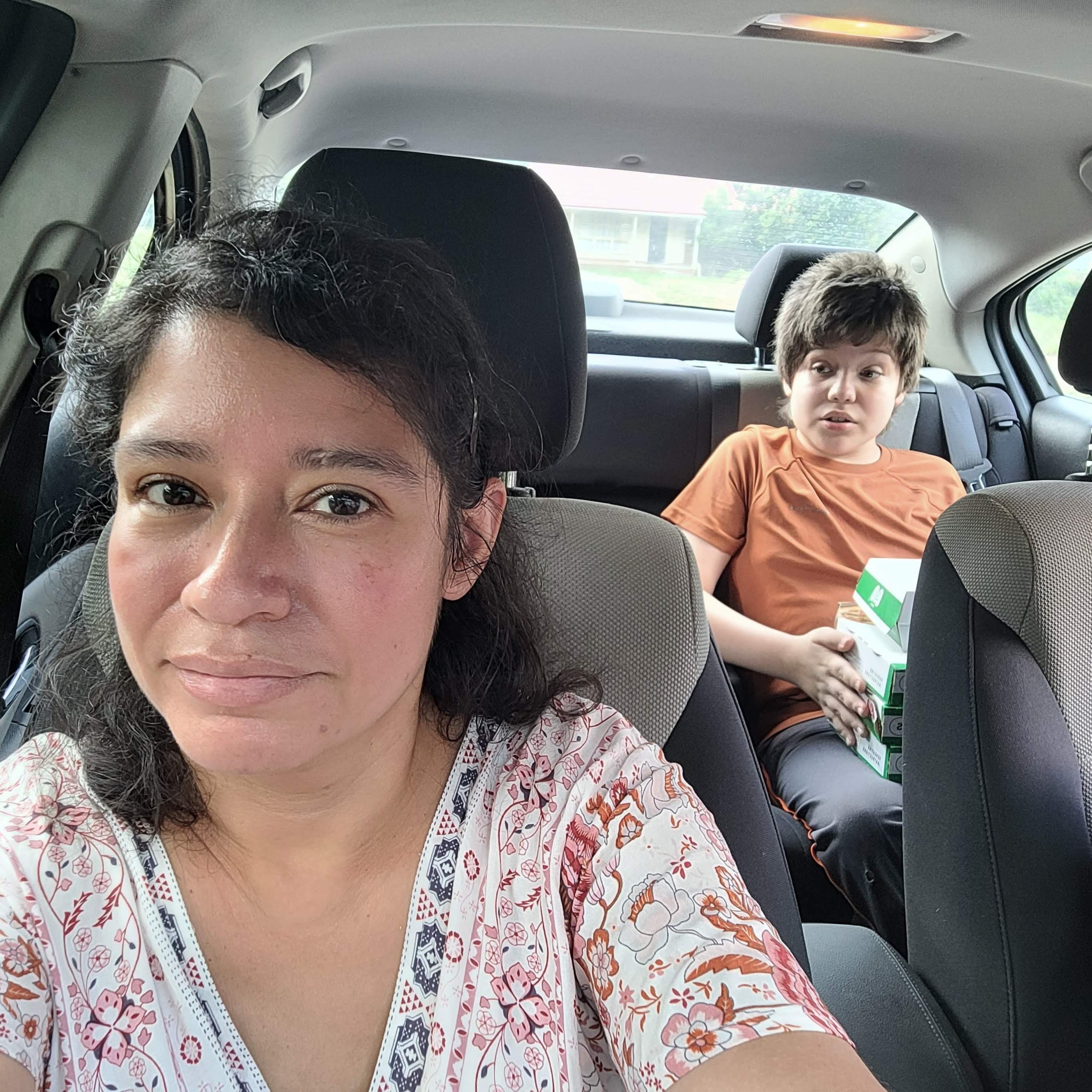
me on the 4th of July with my kiddo
celebrating a country that rips babies apart from their parents and takes away rights from the marginalized and makes anyone who’s not white and christian feel unwelcome feels like the cruelest irony it’s celebrating genocide, racism, prejudice, xenophobia, and white supremacy it’s celebrating everything atrocious and wrong about this country it almost feels like a personal violation of my beliefs to celebrate the hypocrisy of this country founded on genocide and slavery who claims liberty and justice for all but “all” is really white, christian and male so I’m passing on this year’s 4th of July celebrations because except for a small portion of Americans no one can claim true freedom or independence in this American Land
I”m a complete disaster when it comes to love, well, romantic love but I’m great at other kinds of love Loving my children, adoring my friends, worshiping my parents and of course filling myself with self love but still I wonder if somewhere in this big wide world exist an almost ideal lover who’ll bring out my best and love me at my worse who won’t put me on a pedestal and doesn’t scare easily and leave when he sees all of me
Is this a new kind of avoidance? Blocking and escaping any new love possibility- or maybe I finally understand How much I value my solitude Maybe I’m finally enjoying an inner peace and calm that comes with being alone Maybe I’ve finally learned I really am enough on my own
put me on a pedestal and watch how quickly I fall for saying no to you For standing up for myself for making myself heard You’ll cry foul and wonder, where did my dream girl go? but don’t you see- I wasn’t made for altars and pedestals I was made for thrones A throne where I know my worth A throne where I’m valued A throne where I’m appreciated as a whole person and not just seen as an object as affection and masturbation So quit seeing me as a saint or angel and understand I’m a chaotic queen
Cover me with a blanket of lies and tell me you love me tell me I’m the only one for you and false promises about you’ll never leave and how you’re not like the other guys Love me at your convenience, love me when I’m easy I’ll believe the fantasy and play my role of the perfect and polite princess until one day, I grow out of my role and explode and I’ll discover once again you’re like everyone else who can only stand me for a short while and accuse me of being a crazy bitch and leave
In therapy I’m supposed to write about the last thing that cause me grief and I think it’s funny considering the tons of poetry and journal entries I’ve written about it I’m tired of writing about it, I’m tired of talking about it I’m tired of thinking about it and I want to tell my therapist I don’t have homework for this week but this is part of therapy this is what I need to address the unhealed trauma within so I’ll write for the 1000th time about the last thing that caused trauma and grief hoping my therapist will provide valuable insight on how to let go of it