Recession-Proof: Staying Sharp When the Bottom Drops Out

Image by Freepik

Recession-Proof: Staying Sharp When the Bottom Drops Out by Ian Garza

When the economy tanks, the air changes. People move differently. You feel it in the supermarket aisle, where heads tilt at price tags like they’re trying to solve a riddle in a foreign language. Maybe you’re there, pen hovering over a notebook, drafting your next pitch while wondering if peanut butter can be considered a luxury item now. Recessions have a way of pushing people into the deep end, but oddly, that’s where the best swimmers emerge. The trick is less about bracing for impact and more about learning to glide with the current. Here are seven ways to make the chaos work for you, journal in hand and mind on fire.

Cut Costs, Not Corners
You don’t need to become a coupon-clipping caricature to start slicing your expenses with surgical precision. Start by conducting a cold, heartless audit of your monthly costs—subscriptions, takeout, half-used gym memberships—and ask yourself which of them you’d defend in a court of law. Reallocate the scraps toward things that either earn money or preserve your sanity. Groceries, for instance, offer massive wiggle room if you’re smart about what hits the cart—save money on groceries by swapping brand loyalty for nutritional label scrutiny. Don’t eat out of boredom or habit, eat with purpose. A recession isn’t a punishment; it’s a new set of rules, and frugality is a game you can win.

Skill Up or Ship Out
Those who thrive during downturns don’t wait for job boards to dictate their worth. If your industry’s shaking like a leaf, shift your gaze toward sectors that don’t flinch when markets do—healthcare, IT, education, logistics. There’s a buffet of free online courses that can turn idle time into economic leverage. Learn Excel if you’re breathing. Pick up copywriting, coding, or UX design between episodes of that comfort show you’ve already seen four times. Skills are portable power, and adding new ones doesn’t just insulate your income—it inflates your confidence. The job may not be instant, but the momentum is.

The Side Hustle Shuffle
You don’t need to start a Shopify store selling ornamental cacti to qualify as an entrepreneur, but having a second income stream isn’t a luxury anymore—it’s a survival tactic. Whether it’s reselling thrifted clothes or offering dog walking in your neighborhood, a side hustle doesn’t have to be revolutionary. It just has to work. Take an honest inventory of what you’re good at and find the angle—start a side hustle that fits into your existing life, not the other way around. It might start small, maybe laughably so, but consistency snowballs. One gig turns into a rhythm, and suddenly, your “just in case” income becomes your “thank God I did” lifeline.

Write It Out
There’s something quietly defiant about writing things down when the world feels untethered. Journaling isn’t about profound revelations or poetic flair—it’s about evidence. Document your spending, your mood, your micro-victories. Create a log of sanity that future-you will be grateful for. The benefits of journaling during tough economic spells are both psychological and strategic—it can help you track your patterns, spot opportunities, and process fear without letting it drive. For writers, it’s a gym session. For everyone else, it’s cheap therapy that never talks back.

Invest in a Home Warranty
Nothing torpedoes a fragile budget like a busted HVAC or a rogue refrigerator. When repair costs punch a surprise hole in your wallet, having a home warranty isn’t just smart—it’s protective armor. These plans can cover major systems and appliances, offering a reliable safety net when unexpected breakdowns hit. The key is picking coverage that doesn’t just slap a Band-Aid on the issue. Find one that includes the removal of defective units and protects against breakdowns caused by botched repairs or sloppy installs—this page is a good resource for comparing that kind of nuanced coverage. You’re not betting on things going wrong. You’re admitting they will, and preparing accordingly.

Community Over Chaos
Isolation is expensive, both emotionally and practically. Reaching out to neighbors, local groups, or church networks isn’t just good manners—it’s fiscal strategy. There’s a staggering array of local community resources offering everything from food distribution to financial counseling, yet many go untapped. It’s not charity. It’s infrastructure—one that exists precisely for this kind of moment. Volunteering also doubles as networking. You help others while subtly reinforcing your own safety net, a win-win most spreadsheets can’t quantify.

Mind Over Money
Financial fear corrodes slowly, eating away at confidence and sleep and even relationships. Address it like you would any other health issue—diagnose, manage, treat. Don’t ignore your stress or trivialize it. And don’t obsessively refresh stock tickers or headline feeds. Use breathing techniques, therapy apps, and if needed, professional help. Learn how to manage financial stress in a way that doesn’t involve locking yourself in a doomscroll loop until 2 a.m. The money part is real. The mental toll is realer. You need both ends intact if you’re going to make it through with anything resembling grace.

There’s no single blueprint for surviving a recession because recessions don’t care about blueprints. They bulldoze predictability and force reinvention. But they also burn away distractions and push people toward clarity. Whether you’re writing it out, hustling at night, or just trying to keep your fridge running without inviting financial ruin, the throughline remains the same: adapt with intention. You don’t have to thrive every day. You just need to keep moving—and that, on the worst days, is a kind of success all its own.

Discover the transformative power of poetry and personal storytelling at Life on the BPD, where creativity blooms and every verse is a step towards healing and empowerment.

So many goals so little time

Fr fr

Something on your “to-do list” that never gets done.

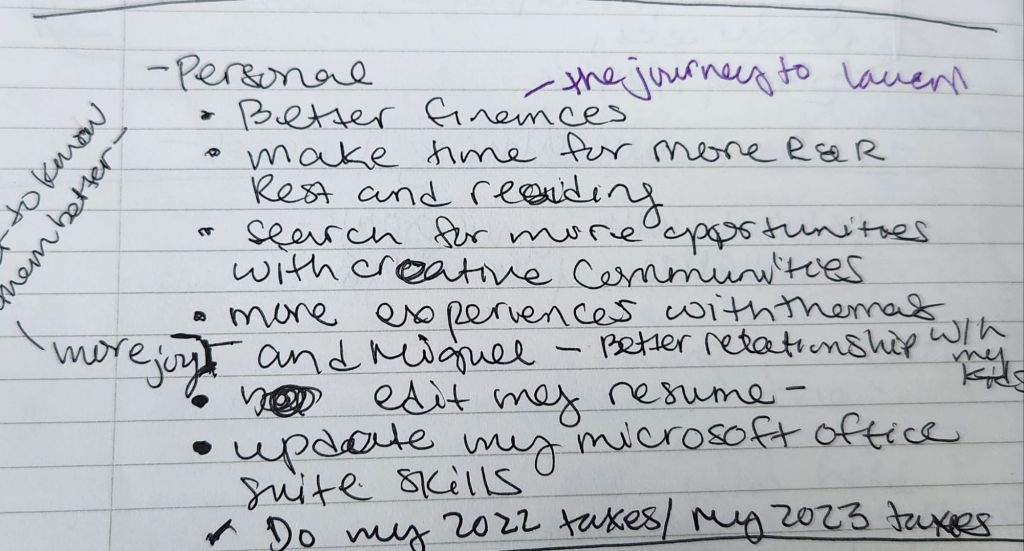
My goals for 2024

So my time is limited because of my crazy working hours, but something that keeps getting pushed to the back burner are my taxes from last year. I freaked out last year because haha I have to pay back an obscene amount ( welcome to middle class status in America), so I basically ignored them, and now here I am in a new tax year but now filing in a different status cause of my divorce. The good thing is that my oldest just got his A.A in accounting so he’ll do them for me this month or next. I’m good with the turbo tax software, but my situation feels like beyond my comprehension, so I’ll let an expert do it. Something I also need to do is spend more time with my 2 youngest sons. It is hard because my youngest likes to spend more time with his friends, and my other son has particular interests, which include discussing the state of world affairs and watching depressing foreign films. But yeah, I need to work on my relationship with both of them. I even suggested playing fortnight with my youngest, but he told me it was cringe and I’m too old. Lol. I hope this time next month, I’m done with my taxes and find ways to bond my sons.

How to Cope with Financial Hardships

Photo Credit: Sincerely Media via Unsplash

How to Cope With Financial Hardships

By Julia Mitchell


Life doesn’t always go the way we planned, and oftentimes our finances take a hit during these detours. Perhaps you lost your job because of downsizing, or you’ve struggled to find good-paying work. Or you could be recovering from financial debt from an extended illness or repair. No matter the cause, financial stress can feel inescapable. Fortunately, there are some steps you can take to change your situation. Life on the BPD explains how.

Consider Changing Careers

Unemployment is a serious problem, and many people have been out of work. The number of people reporting unemployment has varied a lot recently, but numbers are slowly decreasing. This is a great trend, but lost money during extended unemployment can impact you for a long time. And if your new job doesn’t pay enough, it will be difficult to financially recover from that deficit. 

If you’re noticing changes to your work prospects with no end in sight, or if the type of job you were doing won’t pay enough to get you back out of debt, you may want to consider changing careers. Think about other areas of interest where your education and work history may be relevant. Consider going back to school. There are many options from traditional classes to night classes or even online degree programs. 

Lastly, you may decide that you want to start a business of your very own. Beyond coming up with an idea for your company, there are a few things you need to do to get things started. First, you need to come up with a business idea. This can be something you’re passionate about or have experience in. Once you have your idea, you’ll need to start planning everything out. This includes coming up with a name, logo, and brand. You’ll also need to create a website and social media accounts. Once all of that is done, you’ll need to start marketing your business and getting customers. The best way to do this is by networking and using social media. Finally, you’ll need to continue growing your business by always being on the lookout for new opportunities. If you do all of these things, you’ll be well on your way to starting a new company.

Take Time for Yourself

Between work, family obligations, and worrying, you may find you have little time for yourself. This can lead to a vicious cycle of a lack of sleep and anxiety. When you’re stressed and not getting enough sleep, you’re more likely to eat poorly, which only worsens the problems.  Instead, do something just for yourself. You could read a book, take a relaxing bath, or exercise. Engage in anything that takes your mind off your financial problems. 

Reevaluate Goals

It may feel overwhelming, but now is a great time to reestablish your financial goals, since you are dedicated to getting yourself back on track financially. Take a look at your current goals and decide if they’re still feasible. It may be time to alter them to adjust to the economic climate and extend the overall timeline. Set positive goals with smaller sub-goals so that you can see your progress. But also push yourself towards a challenging final goal. You may be surprised by what a little positive anxiety can help you accomplish.

If you’re not sure how to set new goals, consider working with a financial planner or doing some online research. They gather helpful information about financial planning, including professionals who can come alongside you to create and support these goals and present them online. A little guidance can go a long way!

Create a New Budget

Budgeting helps you know exactly how much money is coming in and going out. You know how much you can save monthly and how much you have to enjoy.

However, when situations change your budget needs to change, too. You may currently have more costs related to your household, potentially less income, and possibly fewer entertainment options. At this point, it’s time to create a new budget with all this in mind.

Once you have an accurate, up-to-date budget, you should look for areas where you can spend less and save more. With an uncertain economic climate, it’s more important than ever to have a nest egg.

Consider Refinancing Your Home

The pandemic brought about historically low refinance rates. Look at your options, because you could save yourself money each month and in the long run. For example, you can look into cash-out refinancing, which replaces your current mortgage with a larger one. You then receive the difference between the old and new as cash, which gives you some money to use however you choose. 

If you’re interested in refinancing, you’ll need to gather some information first. When you cash out or take a home equity loan, the lender needs to know your home’s current appraisal and the amount you still owe on your house. The appraisal will determine how much your home is worth now so that your lender can calculate how much equity you have in your home. The equity is the amount of money your home is appraised for minus the amount you still owe on your mortgage.

Don’t Let Hardships Take a Toll on Your Finances

Life has a way of surprising us – sometimes for good and other times not-so-good. Even if you’ve experienced some financial hardships lately, don’t let them completely derail your finances. Take a deep breath and reevaluate. Then, take steps today to start putting away money, even if that means you have to make a career change or reevaluate your budget.

Julia Mitchell is a career and finance writer. Check out here work at http://www.outspiration.net